Cookie settings

Choose which cookies we can use. You can change your mind at any time from “Cookie settings” at the bottom of every page.

Read more in our privacy notice.

Open 7 days.

0116 504 2929WhatsApp 07882 789455

Book an appointmentBook an appointment

Early Pregnancy & Reassurance Scans in Leicester

An early pregnancy scan can help you understand what is happening when waiting feels difficult. At Althea in Leicester, the scan is a clinical assessment, with time to discuss what the images do and do not show. You may be seeking reassurance after a previous loss, or advice about bleeding or pain or be excited for your first baby scan. We explain the findings and agree the next step with you.

Or call 0116 504 2929

A woman in a knitted jumper holding a printed early pregnancy ultrasound scan

When to seek urgent help If you have severe or one-sided abdominal pain, heavy bleeding, shoulder-tip pain, dizziness or fainting, seek urgent medical help now through A&E or 999. For less severe bleeding or pain, contact your GP, NHS 111 or an early pregnancy unit promptly. Please do not wait for a booked scan if you feel unwell.

Prices

What an early pregnancy scan costs, and what’s included. You can self-refer, so you don’t need a GP letter.

Early pregnancy

Early pregnancy scans in Leicester from 6 to 12 weeks, with reassurance after miscarriage, PULPregnancy of unknown location or ectopic pregnancy.

  • Viability or reassurance scan
  • Transabdominal and/or transvaginal ultrasound
  • Digital images and an electronic report for you and your GP
  • Referral to hospital for any problems identified
  • Early pregnancy scan£80
  • Early pregnancy scan with private prescription£110
  • Early pregnancy scan and consultation£150
  • Early pregnancy multi-scan package£240

Printed scan pictures (up to 4 printed pictures): £10

Who this scan is for

You may want an early assessment after a previous miscarriage, ectopic pregnancy or pregnancy of unknown location. You may have uncertain dates, a change in symptoms, or simply want a clinical explanation before your routine maternity scan. We will listen to the reason you have come and tailor the discussion to it.

If you are bleeding or in pain, the first question is whether you need an urgent NHS assessment. A scheduled private scan cannot replace emergency care, serial blood tests or the follow-up pathway for a suspected ectopic pregnancy. Tell us about any prior ectopic pregnancy, fertility treatment or current symptoms when you enquire so the team can advise on the right route.

A sonographer scanning a smiling pregnant woman, with her baby on the screen

Clinical early pregnancy scans

This is a medical scan to assess an early pregnancy and discuss any concerns. It is different from a keepsake scan: the purpose is to look carefully at the pregnancy, explain uncertainty and arrange appropriate follow-up if needed. A reassuring image can feel important, but no scan can promise how a pregnancy will progress.

We ask about your dates, symptoms and relevant history before scanning. Your clinician may suggest an abdominal or transvaginal approach, depending on what is likely to provide a useful view. You can discuss either option before giving consent. The findings are explained in ordinary language, with room for questions. Your scan report is digital and is emailed to you with the images.

Viability and reassurance scans

These labels describe the reason for visiting, not different standards of care. We use the same careful approach to every scan.

  • Viability assessment

    • Looks at the location and development of the pregnancy.
    • May assess cardiac activity when it is possible to see it.
    • Uncertain findings need a follow-up plan, not a rushed conclusion.

    Choose this if you need a clinical answer about an early pregnancy or have been advised to seek assessment.

  • Reassurance appointment

    • A clinical scan with space to discuss a previous experience or current worry.
    • Explains what can be seen at this stage and what remains uncertain.
    • Does not predict the rest of the pregnancy.

    Choose this if you want a careful review and discussion in the absence of urgent symptoms.

What may be seen as pregnancy develops

These are guides, not deadlines. Dates and visibility vary, and a very early scan can create uncertainty where waiting might give a clearer answer.

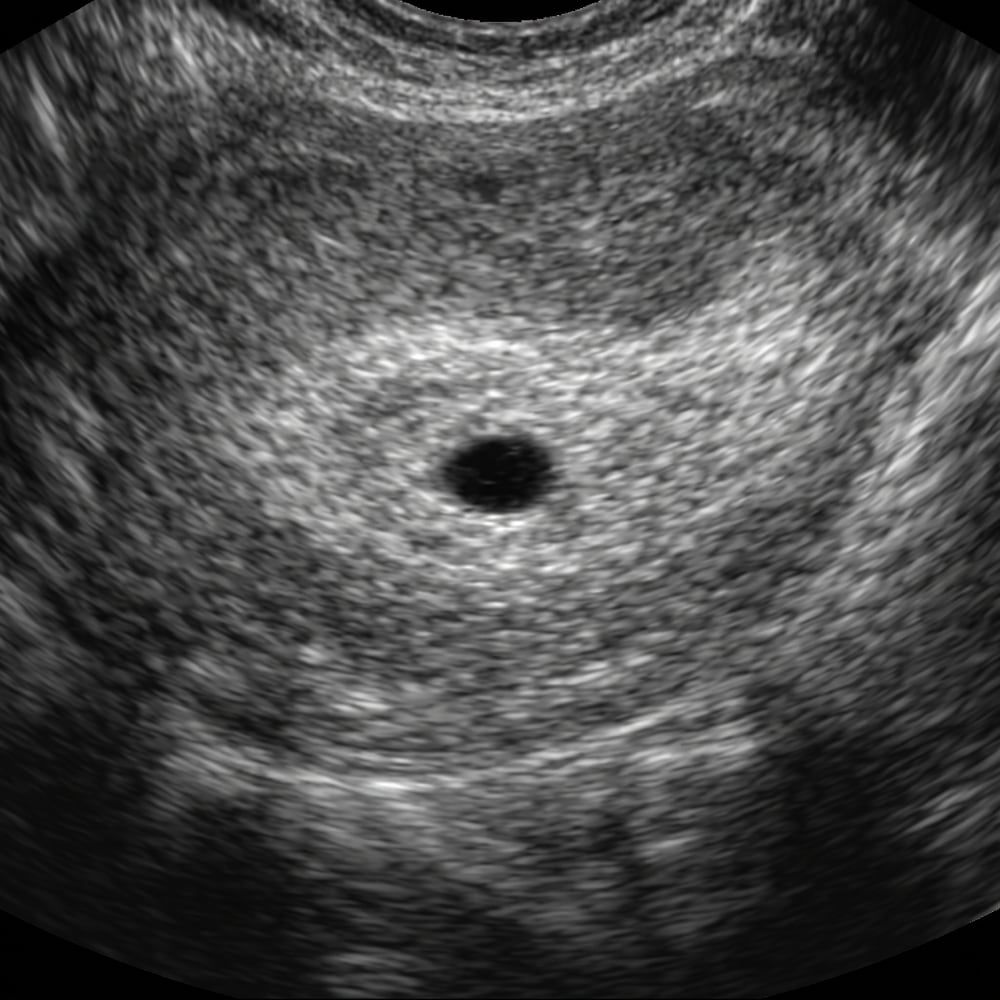
  1. Ultrasound scan at around 4 to 5 weeks, showing a small, dark gestational sac in the wombAround 4–5 weeks

    A small gestational sac

    A small, fluid-filled gestational sac in the womb may be all that can be seen. It is often too early for a yolk sac or fetal pole, so we may suggest waiting, or a repeat scan, for a clearer answer.

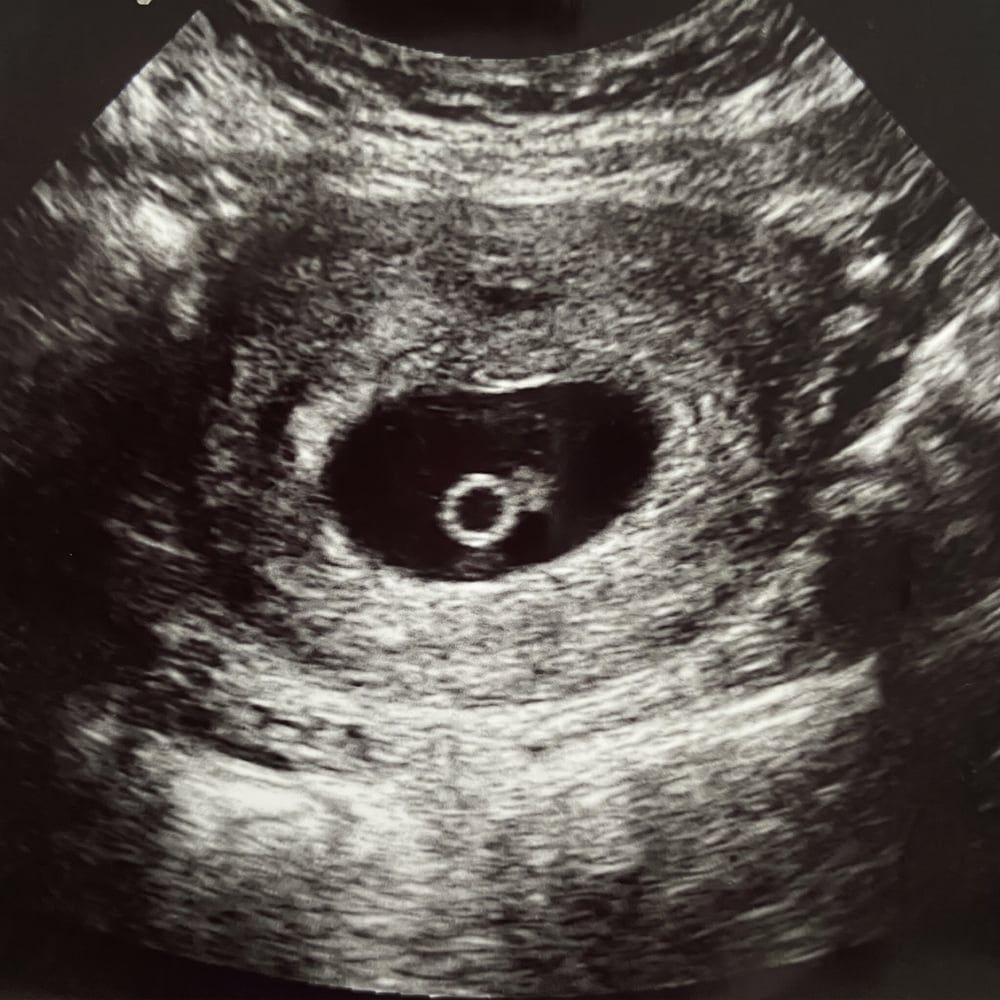
  2. Ultrasound scan at around 6 weeks, showing a gestational sac with a round yolk sac insideAround 6 weeks

    Early signs

    A yolk sac, and sometimes a small fetal pole, may be seen inside the sac. A heartbeat may or may not be visible yet. Your clinician will explain what that means for your dates.

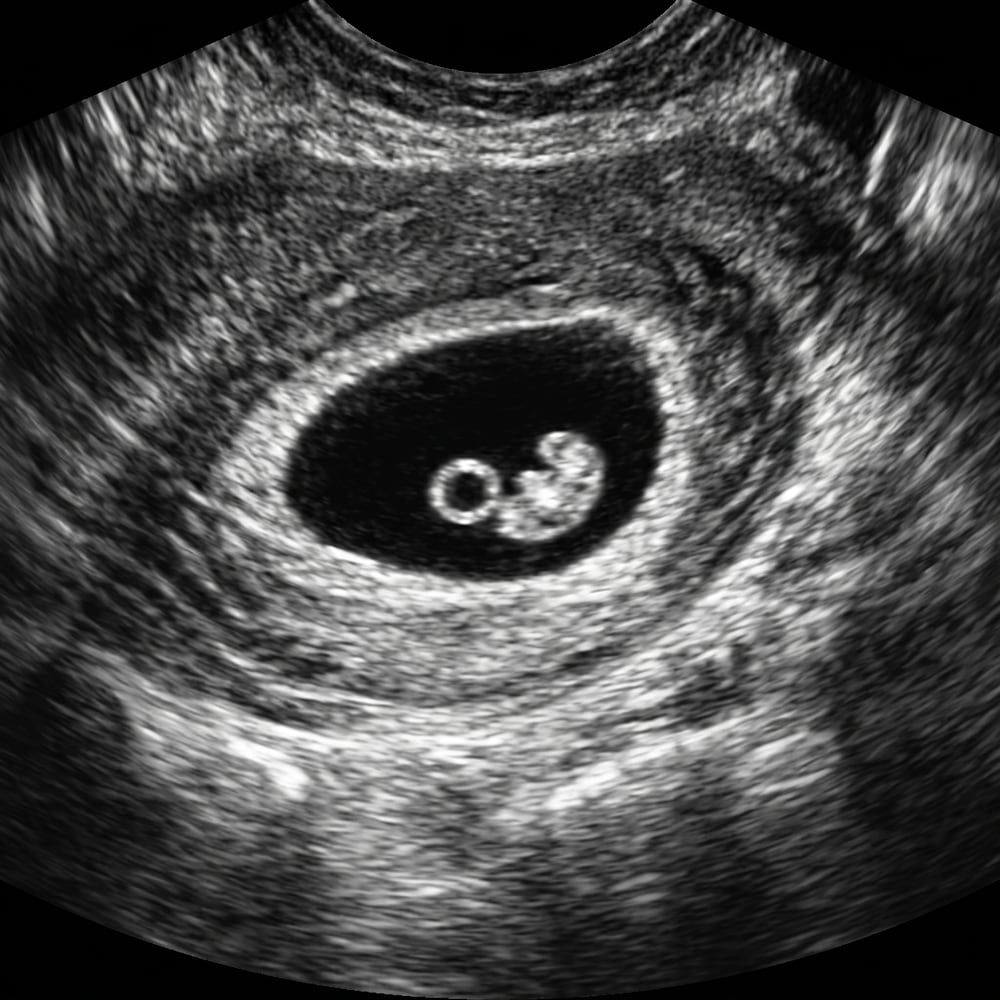
  3. Ultrasound scan at around 7 weeks, showing the yolk sac and a small developing pregnancy beside itAround 7 weeks

    Developing detail

    The fetal pole becomes clearer, and cardiac activity may be visible. A difference between calendar dates and scan measurements can still matter; one image alone may not settle viability.

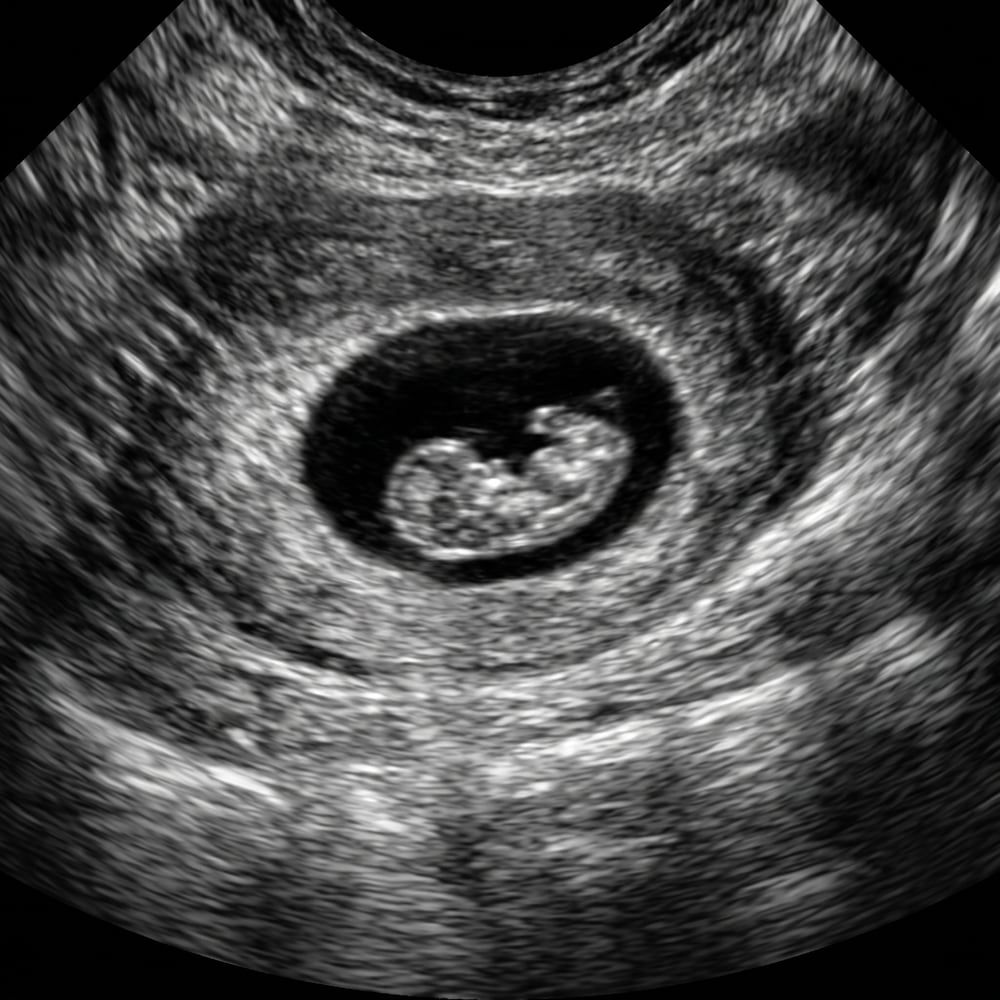
  4. Ultrasound scan at around 8 weeks, showing the early head and body of the developing pregnancyAround 8 weeks

    Reviewing growth

    The developing pregnancy can usually be measured more clearly, and the head and body start to take shape. If you have had an earlier scan, we compare the findings and discuss whether growth follows the expected pattern.

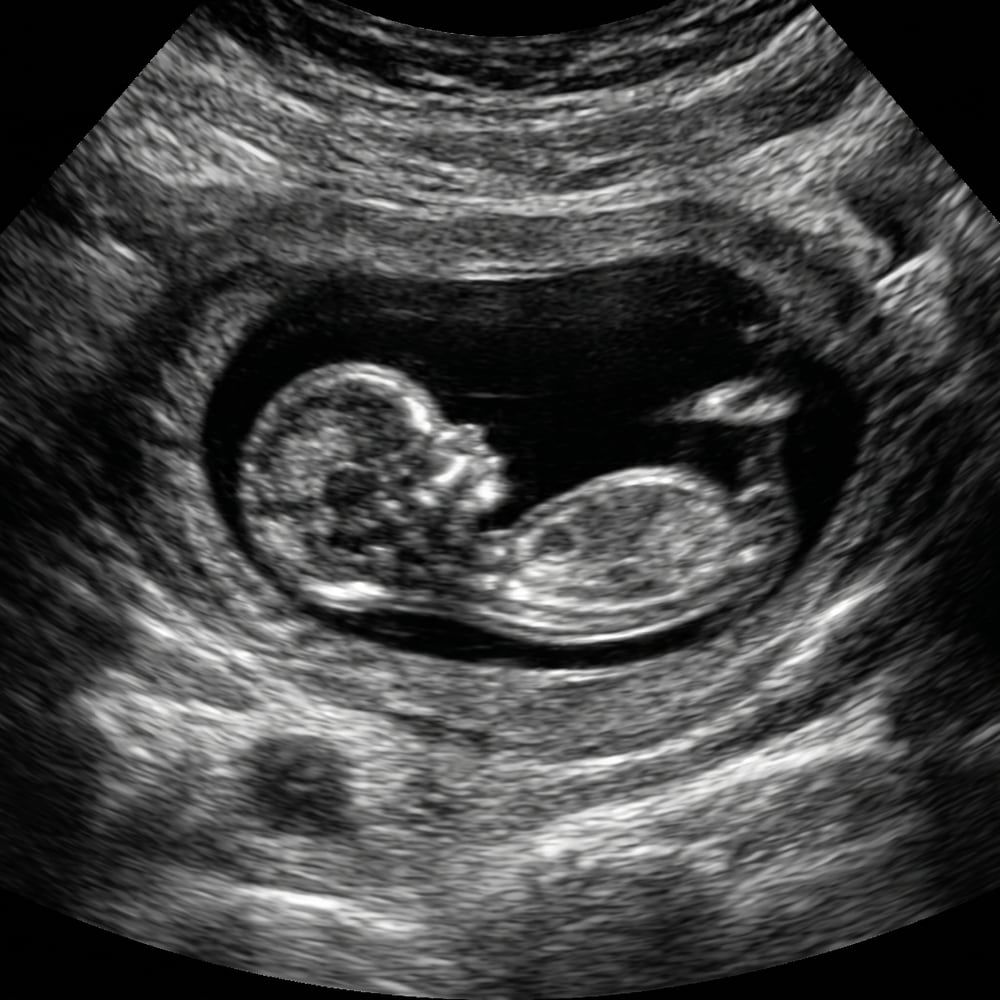
  5. Ultrasound scan at around 12 weeks, showing the baby in profile with head, body and limbsAround 12 weeks

    End of the first trimester

    The head, body and limbs can be seen, and growth and dating can be checked, including whether more than one baby is present. Your routine NHS maternity care and dating scan remain important, whatever a private scan shows.

What happens at your appointment

  1. We hear your concerns

    Tell us what you know about your dates, any bleeding or pain, earlier scans and previous pregnancies. This history shapes which questions the scan can answer and whether hospital assessment is safer. You can bring someone with you.

  2. We scan with your consent

    The clinician explains the recommended approach and what they are looking for. A transvaginal scan may give a clearer view early on; you remain in control of whether it goes ahead. We talk through visible findings without treating an early absence of a milestone as an automatic diagnosis.

  3. We explain a plan

    You can ask questions before leaving. If the findings are clear, we explain what the scan establishes and what it cannot predict. If they are uncertain, we discuss the appropriate repeat scan, blood tests or urgent referral. Your scan report is digital and is emailed to you, with the images, straight after the scan.

If the scan isn't straightforward

A scan might show a pregnancy that is too early to assess fully, no clear pregnancy in the womb, or findings that need a second opinion. These situations can be frightening. We will describe what is visible, what is unknown and why follow-up matters. NICENational Institute for Health and Care Excellence guidance uses repeat imaging and, for pregnancy of unknown location, clinical assessment and blood tests rather than a conclusion from one image.

If miscarriage is suspected, you should be offered a clear explanation and options for further care. If an ectopic pregnancy is possible, hospital services are needed because the condition can become urgent. We can help you understand the referral route, but the hospital team will lead emergency investigation and treatment. Please tell us if your symptoms change after an appointment.

  • Miss Neelam Potdar, Consultant Gynaecologist

    Miss Neelam Potdar

    Consultant Gynaecologist and Subspecialist in Reproductive Medicine & SurgeryGMCGeneral Medical Council 5207836

    Miss Neelam Potdar cares for women with early pregnancy problems and recurrent miscarriage, and has published research on predicting miscarriage and on the diagnosis and management of ectopic pregnancy. At an early pregnancy scan she relates what can be seen to your dates, symptoms and any previous pregnancies, explains what may still be too early to tell, and agrees with you when a repeat scan or hospital assessment would help.

    Read Miss Potdar’s full profile
  • Miss Pratibha Patil, Consultant Gynaecologist

    Miss Pratibha Patil

    Consultant GynaecologistGMC 6149732

    Miss Pratibha Patil focuses on early pregnancy assessment and the questions a scan can safely answer. She discusses dates, symptoms and previous experiences before interpreting the image, and explains when an uncertain finding needs another scan or hospital care. Her approach leaves space for difficult news and for the questions that may follow it.

    Read Miss Patil’s full profile
  • Jay Patel, Senior Sonographer

    Jay Patel

    Senior SonographerHCPCHealth and Care Professions Council-registered

    Jay Patel performs early pregnancy ultrasound with attention to both technical detail and the feelings that may come with an uncertain image. Jay explains what is visible, what is too early to assess and why follow-up may matter. You can ask questions during the scan and discuss the report before deciding on a next step.

    Read Jay Patel’s full profile

Schedule your visit

Choose the appointment you need. Each option opens the right booking form in our secure booking system.

Appointment type

Our clinical expertise

Research our clinicians have led or contributed to, in plain English.

Common questions

How early can I have a pregnancy scan?

A scan may be offered from around six weeks, counted from the first day of your last period. Dates can be uncertain, especially with irregular cycles. Earlier than this, the pregnancy may simply be too small to interpret. We can help you choose a useful time and explain what a repeat scan might mean.

Is 7 weeks too early for a scan?

For many pregnancies, seven weeks is a useful point for an assessment, but development and dates vary. A single scan may not answer every question. If the findings are uncertain, your clinician will explain whether another scan or hospital assessment is appropriate.

Will I see a heartbeat at 6 weeks?

A heartbeat may be visible, but it cannot be promised at a particular date. The scan findings depend on when conception happened and how the pregnancy is developing. We will explain the milestones seen and avoid drawing a conclusion before the evidence supports one.

Do the NHS offer early pregnancy scans?

NHS early pregnancy services assess symptoms such as bleeding or pain, according to local pathways. Routine scans have a different purpose and schedule. If you have symptoms, contact your GP, midwife, NHS 111 or your local early pregnancy unit; a private appointment should not delay urgent assessment.

How much is an early pregnancy scan?

The available appointments and any confirmed charges are listed in the prices section. Please ask us which option fits your circumstances, especially if you need a consultation as well as imaging. Unconfirmed amounts are withheld until the clinic signs them off.

Is a transvaginal scan safe in early pregnancy?

Transvaginal ultrasound is a standard way to assess an early pregnancy and does not cause miscarriage. Your clinician will explain the examination and seek your consent. You can ask questions or stop the examination at any point.

What do abdominal and internal scans look like?

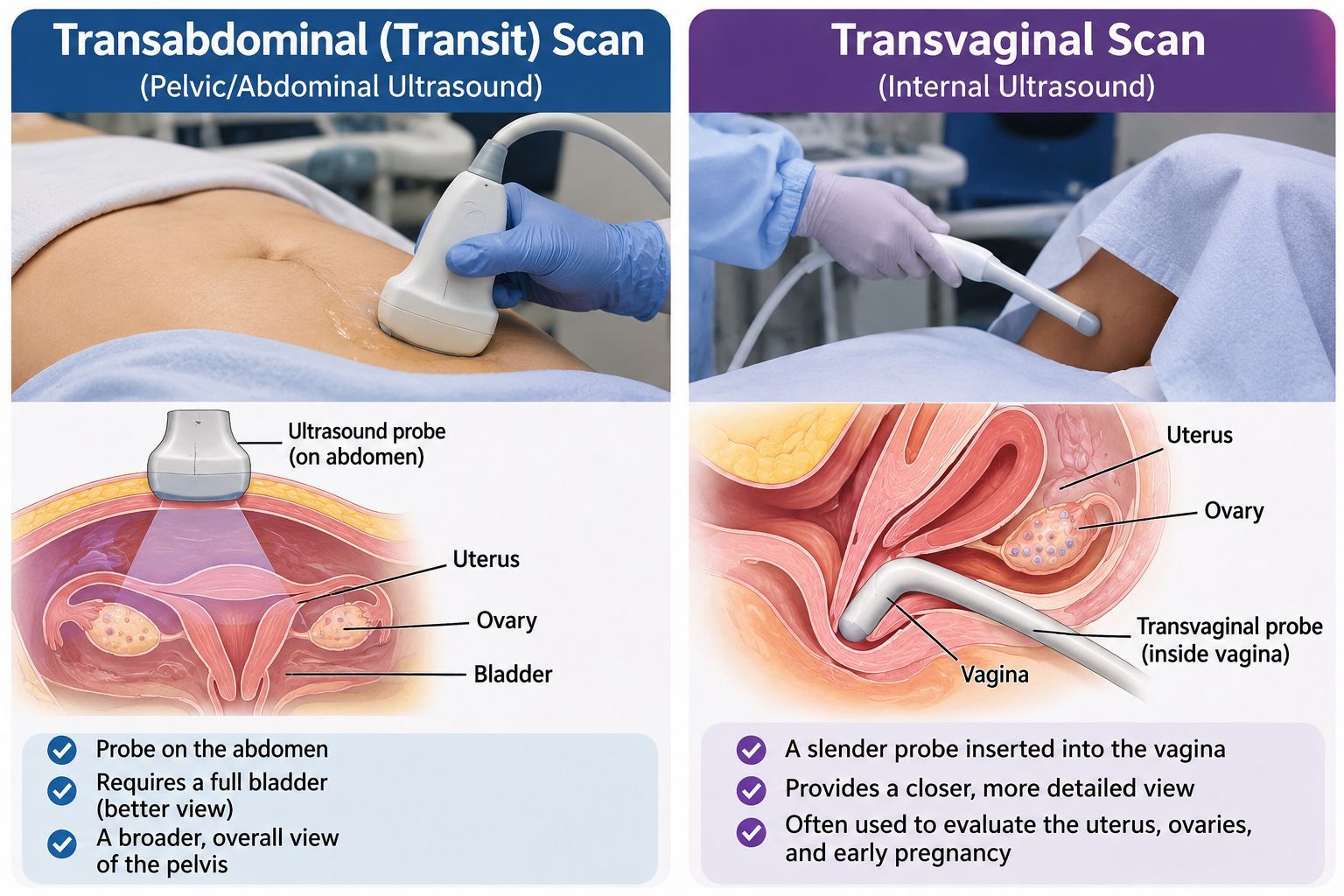
The picture below shows the two ways of scanning the womb and ovaries:

  • Abdominal (transabdominal) scan: the probe moves over your lower tummy with a little gel. You’ll need a full bladder, and it gives a broader view of the pelvis.
  • Internal (transvaginal) scan: a slender probe is placed gently in the vagina. Being closer to the womb and ovaries, it gives a clearer, more detailed view, and it is often used in early pregnancy.

Your clinician will explain which approach suits you, and you can ask questions or stop at any time.

Illustration comparing the two scans. Transabdominal scan: the ultrasound probe rests on the abdomen, the bladder needs to be full, and it gives a broader, overall view of the pelvis. Transvaginal scan: a slender probe is inserted into the vagina, giving a closer, more detailed view of the uterus and ovaries, and it is often used in early pregnancy.
Can I have a scan if I'm bleeding?

Bleeding deserves clinical advice. Contact your GP, midwife, NHS 111 or an early pregnancy unit so the right assessment is arranged. Severe pain, heavy bleeding, fainting or shoulder-tip pain need urgent hospital help. A private scan may be considered when urgent care is not needed.

Does this replace my NHS dating scan?

No. Continue with your usual maternity appointments and NHS scans. An Althea early pregnancy scan is an additional assessment at an earlier stage or for a particular concern; bring its report to your maternity team if useful.

What happens if you can't see the pregnancy?

This can mean it is too early, a pregnancy has ended, or the pregnancy is outside the womb. It is called a pregnancy of unknown location until clarified. You need a clear follow-up plan, which may include hospital assessment, blood tests and repeat imaging. Seek urgent help if symptoms worsen.

Further information and support

Sources & clinical references

  1. National Institute for Health and Care Excellence. Ectopic pregnancy and miscarriage: diagnosis and initial management (NG126) (opens in a new tab). 2019.
  2. NHS. Ectopic pregnancy: symptoms (opens in a new tab). n.d..
  3. Prediction of miscarriage in women with viable intrauterine pregnancy-A systematic review and diagnostic accuracy meta-analysis. European Journal of Obstetrics & Gynecology and Reproductive Biology. 2018. PubMed 29207325 (opens in a new tab) · DOI 10.1016/j.ejogrb.2017.10.024 (journal, may require subscription) (opens in a new tab)
  4. Role of serum biomarkers in the prediction of outcome in women with threatened miscarriage: a systematic review and diagnostic accuracy meta-analysis. Human Reproduction Update. 2016. PubMed 26663220 (opens in a new tab) · DOI 10.1093/humupd/dmv054 (journal, may require subscription) (opens in a new tab)
  5. Early pregnancy complications including recurrent pregnancy loss and obesity. Best Practice & Research Clinical Obstetrics & Gynaecology. 2023. PubMed 37451193 (opens in a new tab) · DOI 10.1016/j.bpobgyn.2023.102372 (journal, may require subscription) (opens in a new tab)
  6. Diagnosis and Management of Ectopic Pregnancy: Green-top Guideline No. 21. BJOG: An International Journal of Obstetrics & Gynaecology. 2016. PubMed 27813249 (opens in a new tab) · DOI 10.1111/1471-0528.14189 (journal, may require subscription) (opens in a new tab)

This page is general information and not a substitute for individual medical advice.