Cookie settings

Choose which cookies we can use. You can change your mind at any time from “Cookie settings” at the bottom of every page.

Read more in our privacy notice.

Open 7 days.

0116 504 2929WhatsApp 07882 789455

Book an appointmentBook an appointment

Fertility Scans & Assessment in Leicester

A fertility assessment brings your history, a pelvic scan and appropriate tests into one conversation. At Althea in Leicester, we explain what an antral follicle count and other findings can tell you, and where their limits lie. You can come on your own or discuss testing with a partner. The aim is a practical next-step plan shaped by your circumstances, not a score that defines your future.

Or call 0116 504 2929

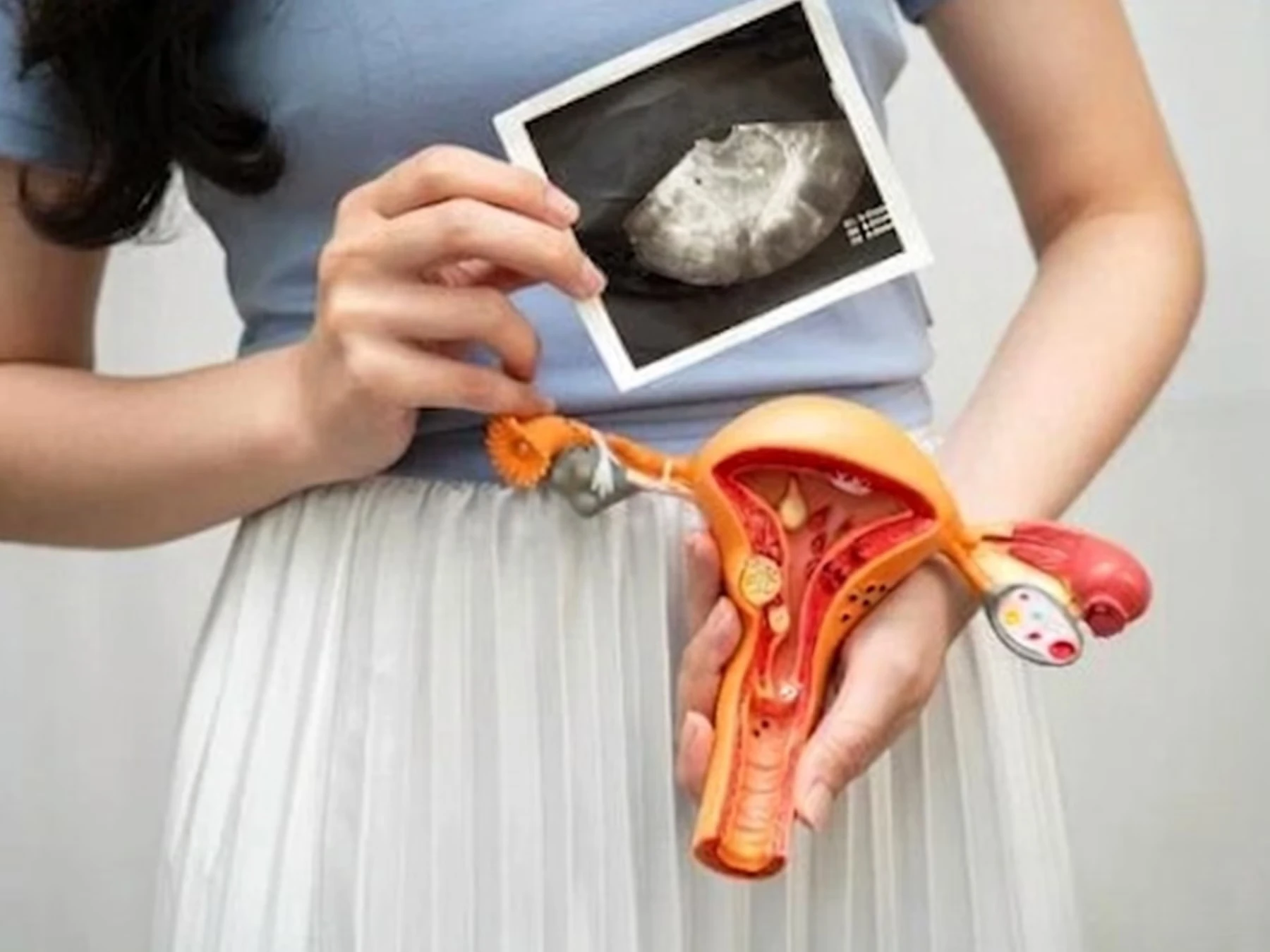
A hand holding a printed ultrasound scan of an ovary, showing its follicles

Prices

What a fertility scan costs, and what’s included.

Fertility

Fertility consultations, scans and hormone tests, with male fertility testing, egg freezing advice and referral to licensed clinics.

  • Antral follicle count for ovarian reserve
  • Checks for PCOSPolycystic ovary syndrome, ovarian cysts, fibroids, polyps, endometriosis and adenomyosis
  • New patient consultation£150
  • Fertility 2D scan£100
  • Fertility 3D scan£150
  • You can choose to have consultation only or ultrasound scan only or both at the same visit for the prices mentioned above. Each takes about 30 minutes, or about 45 minutes together.
  • Follow-up consultation£100

Printed scan pictures (up to 4 printed pictures): £10

When to seek a fertility assessment

You may be considering an assessment because conception has taken longer than expected, your periods are irregular, you have a condition that may affect fertility, or you want to understand your options as a single person or before treatment. Pelvic surgery, endometriosis or medications can also affect fertility. A consultation helps to discuss and put all this in context for the next steps.

We start with your story rather than a standard package. We ask about cycle patterns, previous pregnancies, treatment, general health and any tests already done. If a partner is involved, their history matters too. A scan may identify a reason to investigate further, but it cannot by itself tell you whether conception will happen. If you have urgent pain or bleeding, seek appropriate medical care rather than waiting for a routine fertility appointment.

What the fertility scan checks

  • Ovaries and follicles

    A pelvic ultrasound can count the small antral follicles visible in the ovaries and look for cysts or features that may need further discussion. The count is interpreted alongside your age and treatment plans, never as a pass or fail.

  • Uterus and endometrial lining

    The scan can describe the womb's shape and lining and identify some fibroids or other visible changes. Some problems inside the cavity need a different investigation, so a normal scan does not answer every question.

  • A broader pelvic view

    The clinician considers findings in relation to symptoms, such as painful periods or suspected endometriosis. Ultrasound may see an ovarian endometrioma, but it cannot rule out every form of endometriosis.

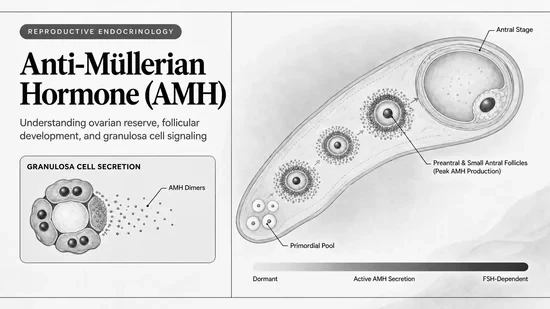
Antral follicle count and AMH explained

Neither number is a verdict on whether you can conceive. Their value lies in a decision they can inform, interpreted alongside age, history and any other results. If you have an older AMHAnti-Müllerian hormone result, bring the laboratory report; different methods and times should not be compared without context.

  • Antral follicle count

    • AFC counts small follicles visible in the ovaries during an ultrasound.
    • It can help inform likely ovarian response during assisted conception.
    • It does not measure egg quality or predict spontaneous conception.

    Choose this if a pelvic scan is part of a wider fertility assessment.

  • Anti-Müllerian hormone

    • AMH is measured in a blood sample rather than on the scan.
    • It can also help inform likely response to assisted conception.
    • NICENational Institute for Health and Care Excellence advises against using it to predict natural conception.

    Choose this if the result would help plan treatment or a referral.

Testing for male and female fertility

A fertility assessment considers both people when a couple is trying to conceive. Depending on your circumstances, this may include semen analysis, cycle history, confirmation of ovulation and selected blood tests. A semen result that differs from the reference range often needs confirmation and clinical interpretation; it is not a judgement on anyone.

If there is concern with the semen analysis, we can offer further advice for the male partner, and hormone tests if considered appropriate. Sometimes, if very few or no sperm are obtained, it is recommended to repeat the semen analysis and arrange hormone blood tests and genetic testing for the male partner.

Testing is chosen to answer a question, not simply to collect more numbers. The clinician can explain whether a hormone test, tubal assessment or referral is appropriate and where each sits in the sequence. Tell us about tests arranged through your GP or another clinic so the plan makes use of information you already have.

For a single person planning treatment, we can discuss which investigations would inform the next conversation with a fertility service.


Further testing

Tubal patency testing is advised depending on other factors, such as AMH and semen analysis. If a scan suggests fibroids, ovarian cysts or possible endometriosis, some findings can be observed; others need further investigation, such as an MRI scan or a surgical procedure. We can discuss the appropriate recommendations with you.

Treatment options depend on the results and include trying naturally, ovulation induction or assisted conception. We can discuss the appropriate medical recommendation and support your decision.

Your assessment, step by step

  1. Share your history

    We discuss cycle timing, symptoms, previous treatment, general health and your goals. You can raise questions that have been hard to fit into a shorter appointment. This conversation helps decide what the scan should focus on.

  2. Have the scan

    The clinician explains the type of pelvic ultrasound proposed and asks for consent. The scan looks at the ovaries, womb and other relevant structures. The report is given to you straight after the scan as a digital copy with images.

  3. Put results together

    We explain the images in plain language and review any available blood or semen results. Our specialists can then guide you and organise further tests of ovarian reserve, tubal assessment and semen analysis as required.

  4. Choose what follows

    The plan involves a discussion of further treatment options, including medication, monitoring, referral for surgery or assisted conception. Your preferences and timeline belong in that choice. There is no assumption that everyone needs the same treatment.

  • Miss Neelam Potdar, Consultant Gynaecologist

    Miss Neelam Potdar

    Consultant Gynaecologist and Subspecialist in Reproductive Medicine & SurgeryGMCGeneral Medical Council 5207836

    Miss Neelam Potdar leads the NHS reproductive medicine service at University Hospitals of Leicester and has directed the regional gynaecology ultrasound scan course since 2011. She brings that reproductive medicine perspective to the fertility scan, considering the image alongside cycle history, previous tests and your plans, and explains which findings could guide further investigation or treatment. Her aim is to give you a reasoned next step without turning an ovarian reserve measure into a prediction about your future.

    Read Miss Potdar’s full profile

Schedule your visit

Choose the appointment you need. Each option opens the right booking form in our secure booking system.

Appointment type

Our clinical expertise

Research our clinicians have led or contributed to, in plain English.

Common questions

How much does it cost to check fertility in the UK?

Private assessment costs depend on the appointment and tests chosen. See the prices section for confirmed options, and ask for a clear estimate before booking additional tests. NHS assessment is also available under local eligibility and referral rules.

Can I ask my GP to check my fertility?

Yes. Your GP can discuss your history, initial tests and local referral routes. Bring any prior results to your Althea appointment so tests are not repeated without a reason.

Does the NHS offer free fertility tests?

The NHS can investigate fertility concerns through GP and specialist pathways. Access to particular tests and treatment depends on clinical need and local commissioning. Ask your GP what applies to you.

Do I need a referral for a fertility assessment?

No. You don’t need a GP referral for a private fertility assessment. A referral letter or previous results can still help the clinician understand the question you want answered.

When in my cycle should I book an AFC scan?

The best timing depends on the purpose of the scan and your cycle. Some measurements are commonly taken early in a cycle, while other questions call for different timing. Tell the team about your cycle and any medication when booking.

Can a scan tell me if I can get pregnant?

No single scan can answer that. Antral follicle count can help estimate ovarian response in assisted conception, but it does not predict whether you will conceive naturally. We interpret it alongside age, history and any other relevant results.

Should my partner be tested too?

Often, yes. Fertility concerns can involve either partner or both. A semen analysis may be part of an initial assessment when relevant. The specialist will request a private semen analysis and explain how the findings fit with the rest of the picture.

What happens if my AFC is low?

A low count is one piece of information, not a verdict. The clinician will look at your age, history, other scan findings and treatment goals. You can discuss whether more testing, a fertility referral or a different plan would help.

Further information and support

Sources & clinical references

  1. National Institute for Health and Care Excellence. Fertility problems: assessment and treatment (NG257) (opens in a new tab). 2026.
  2. Definition and epidemiology of unexplained infertility. Obstetrical & Gynecological Survey. 2014. PubMed 25112489 (opens in a new tab) · DOI 10.1097/OGX.0000000000000043 (journal, may require subscription) (opens in a new tab)
  3. Oocyte vitrification in the 21st century and post-warming fertility outcomes: a systematic review and meta-analysis. Reproductive BioMedicine Online. 2014. PubMed 24931362 (opens in a new tab) · DOI 10.1016/j.rbmo.2014.03.024 (journal, may require subscription) (opens in a new tab)
  4. British Fertility Society Policy and Practice Committee: adjuvants in IVF: evidence for good clinical practice. Human Fertility. 2015. PubMed 25531921 (opens in a new tab) · DOI 10.3109/14647273.2015.985454 (journal, may require subscription) (opens in a new tab)
  5. Donor oocyte conception and pregnancy complications: a systematic review and meta-analysis. BJOG: An International Journal of Obstetrics & Gynaecology. 2016. PubMed 26854328 (opens in a new tab) · DOI 10.1111/1471-0528.13910 (journal, may require subscription) (opens in a new tab)
  6. Strategies to improve fertilisation rates with assisted conception: a systematic review. Human Fertility. 2018. PubMed 28545312 (opens in a new tab) · DOI 10.1080/14647273.2017.1324182 (journal, may require subscription) (opens in a new tab)
  7. Endometrial injury to overcome recurrent embryo implantation failure: a systematic review and meta-analysis. Reproductive BioMedicine Online. 2012. PubMed 23063812 (opens in a new tab) · DOI 10.1016/j.rbmo.2012.08.005 (journal, may require subscription) (opens in a new tab)
  8. Application of sperm DNA fragmentation test in clinical setting. Translational Andrology and Urology. 2017. PubMed 29082188 (opens in a new tab) · DOI 10.21037/tau.2017.05.15 (journal, may require subscription) (opens in a new tab)

This page is general information and not a substitute for individual medical advice.