Cookie settings

Choose which cookies we can use. You can change your mind at any time from “Cookie settings” at the bottom of every page.

Read more in our privacy notice.

Open 7 days.

0116 504 2929WhatsApp 07882 789455

Book an appointmentBook an appointment

Private Gynaecology Consultations in Leicester

A specialist consultation gives you time to explain what has been happening and decide what to do next. Our Leicester gynaecology consultants can discuss symptoms, previous results and the options that fit your priorities. You may come with a new concern or with a diagnosis that still leaves questions. We aim to make the reasoning behind each proposed test, treatment or referral clear.

Or call 0116 504 2929

A doctor in a white coat going through notes with a patient in a consulting room

Prices

What a consultation costs, and what’s included.

Specialist consultations

Private consultant gynaecologist in Leicester for heavy or painful periods, pelvic pain and other women’s health concerns, such as endometriosis, adenomyosis or fibroids.

  • Discussion with consultant and further tests organised as appropriate
  • Medication prescription if appropriate
  • New patient consultation£150
  • Follow-up consultation£100
  • 3D scan of the uterus£150

Concerns we can discuss

  • Periods and bleeding

    Heavy, painful or irregular periods can affect work, sleep and daily life. We discuss the pattern, what you have tried and whether a pelvic scan, examination or other test would help.

  • Pelvic pain and endometriosis

    Pain deserves attention even with a normal scan. The consultation can cover symptoms, treatment choices and whether further imaging or specialist referral is appropriate. A symptom diary can help you describe the pattern.

  • Fibroids, cysts and womb changes

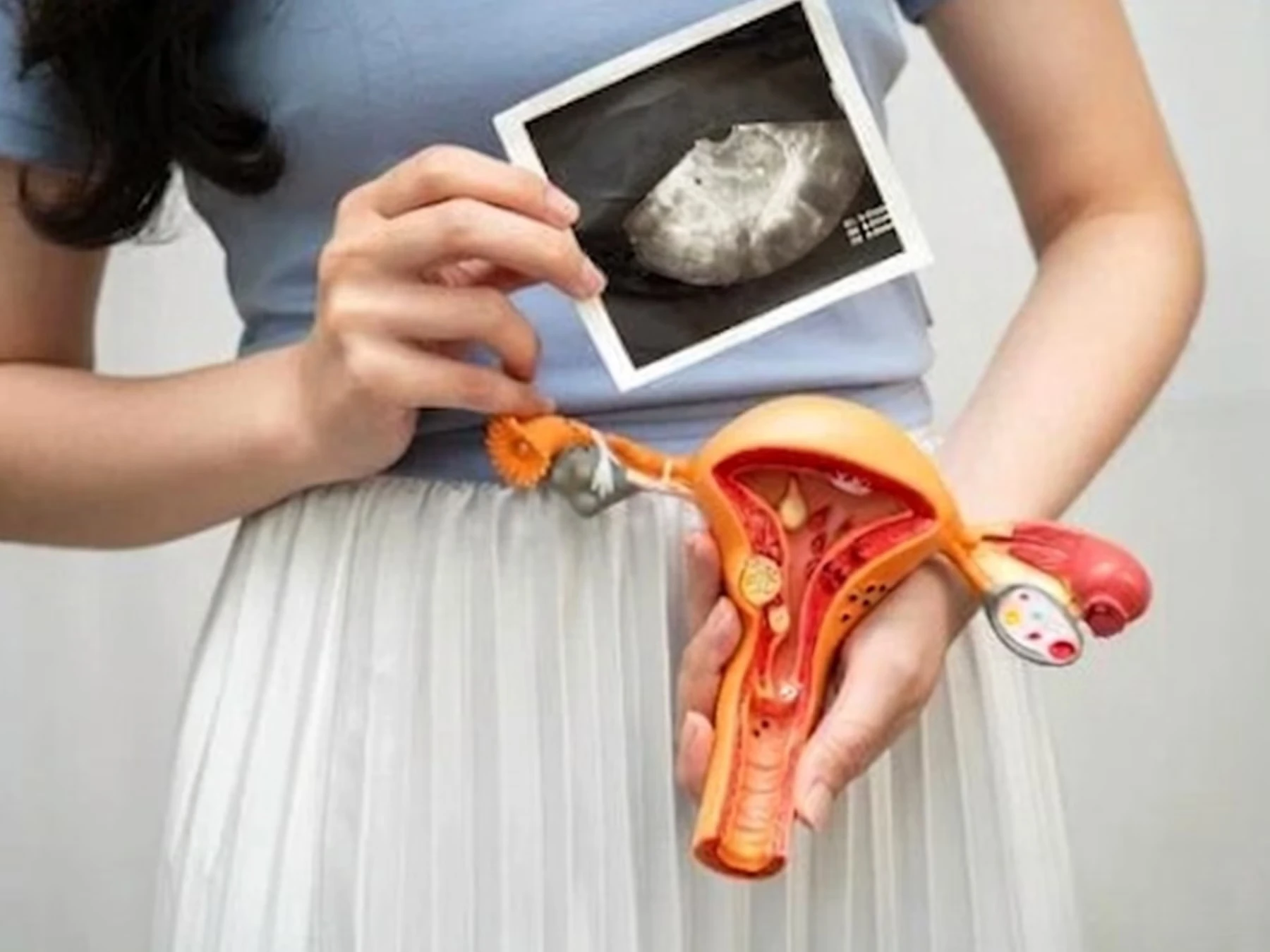
    An image may show a change without explaining all your symptoms. We review the report with you, discuss monitoring and treatment options, and explain when another investigation is useful.

  • Miss Neelam Potdar, Consultant Gynaecologist

    Miss Neelam Potdar

    Consultant Gynaecologist and Subspecialist in Reproductive Medicine & SurgeryGMCGeneral Medical Council 5207836

    Miss Neelam Potdar is Head of Service for Reproductive Medicine at University Hospitals of Leicester and co-chaired the Royal College of Obstetricians and Gynaecologists’ Guidelines Committee from 2021 to 2024. She consults on fertility, endometriosis, menstrual concerns and reproductive health. She reviews the history behind a symptom or previous diagnosis, discusses the choices available and explains the reasoning for tests or referrals. In a consultation, you can ask how a finding relates to your priorities and what each possible next step would involve.

    Read Miss Potdar’s full profile
  • Miss Pratibha Patil, Consultant Gynaecologist

    Miss Pratibha Patil

    Consultant GynaecologistGMC 6149732

    Miss Pratibha Patil consults on early pregnancy and a range of gynaecological symptoms, including pelvic pain, bleeding and suspected structural conditions. She can review imaging, discuss whether further investigation is useful and help you understand the options before making a decision. The appointment is a place to connect a report with the symptoms and concerns behind it.

    Read Miss Patil’s full profile

What happens in your consultation

  1. Tell us your story

    You can explain your main concern in your own words. Bring previous letters, scan reports, medication details and a list of questions if you have them. You do not need a perfect timeline; we can help put events in order.

  2. Discuss an assessment

    The consultant may recommend an examination, scan or selected tests, and will explain why. Any examination needs your consent. You can ask about alternatives, what a result would mean and whether a test is urgent or optional. You can choose beforehand to have an ultrasound scan on the same day as the consultation.

  3. Agree a next step

    Together you discuss treatment, watchful waiting, follow-up or referral. The plan will explain the diagnosis and the action plan, and when to seek further help. A letter about your consultation is shared with you, with a copy for your GP: you can pass it on, or we email it to your GP if we have their address.

Getting ready for your appointment

Write down the question you most want answered and the symptoms that are affecting you most. Dates, photographs of medication labels, previous letters or scan reports can help, but you do not need to assemble a complete medical file. If you have had treatment that did not help, it is useful to say what changed and what side effects mattered.

Some concerns are difficult to describe, particularly pain during sex, heavy bleeding or a pregnancy experience. You can say that you need more time or would prefer a question to be put differently. Tell the team about any accessibility or communication needs when booking. You are welcome to bring someone with you; it is your choice. The appointment should begin with your priorities, then use examination or tests only where they can clarify a decision.

After the consultation: onward care

A consultation may be enough to make a plan, or it may show that another test would answer an important question. For example, pelvic ultrasound can examine the womb and ovaries; MRI may be appropriate for selected problems; some symptoms need hysteroscopy or a specialist referral. We explain what each option is intended to find and whether it could change treatment.

If surgery is being considered, the discussion includes alternatives, likely benefits, risks and where it could take place. Our consultants work at Spire Leicester, where they can carry out private procedures, or they can transfer your care for NHS procedures. You remain free to take the advice to your GP or NHS team. For continuing symptoms, follow-up should revisit whether the first plan helped, rather than treating one normal result as the end of the conversation. For any unexpected emergency, contact your GP or A&E.


Making a decision that fits your life

A treatment can look sensible on paper and still be wrong for your circumstances. Tell the consultant what you hope to change, what you want to avoid and how symptoms affect work, caring responsibilities, relationships or plans for pregnancy. Ask what happens if you wait, try a medicine, have a procedure or seek another opinion. Each option has benefits, burdens and uncertainty.

You can share the consultation letter with your GP, another specialist or a family member. Continuing NHS care alongside a private opinion is possible, although tests and treatment still follow each service's own arrangements. Your questions should remain central after the appointment, especially if new results change the options.

Choosing a care route

Both routes can contribute to your care.

  • Private appointment

    • A completely private, self-pay service. We don’t accept health insurance.
    • Availability and any further test or treatment costs should be checked before booking for tests.
    • A copy of the consultation will be shared with you and your GP.

    Choose this if the appointment format and costs suit your needs.

  • NHS pathway

    • Your GP can assess symptoms and arrange referral where appropriate.
    • Timing depends on clinical urgency and local services.
    • Urgent symptoms should use urgent NHS routes regardless of private plans.

    Choose this if you want to explore the local referral route or continue NHS care.

Schedule your visit

Choose the appointment you need. Each option opens the right booking form in our secure booking system.

Appointment type

Our clinical expertise

Research our clinicians have led or contributed to, in plain English.

Common questions

How much does it cost to see a private gynaecologist?

The prices section shows confirmed new and follow-up consultation options. Scans, tests or treatment may be separate. Ask for an estimate of anything recommended before you agree to it.

Is it worth going private for gynaecology?

That depends on what you need from an appointment, your local NHS pathway, insurance and budget. A private consultation can offer a dedicated discussion, but it does not replace emergency care or your right to NHS care. You can use the written plan with your GP.

Do I need a GP referral to book a consultation?

No. You can book a consultation yourself, without a referral. A GP letter and previous results are helpful when available, but the appointment can begin with your own account of the problem.

Can I use my health insurance?

No. Althea is a completely private, self-pay clinic. We don’t accept health insurance, and we don’t take cash payments.

Can I have a scan on the same day as my consultation?

Yes. You can book a gynaecology scan with your consultation at the same visit, or have either one on its own. Each takes about 30 minutes, or about 45 minutes together. Tell us what you need when enquiring so the team can advise on the right booking.

Can a consultant prescribe HRT?

A consultant can discuss whether hormone replacement therapy is appropriate after reviewing your symptoms, medical history and preferences, and a private prescription for medication can be provided. A blood test is not routinely needed to identify menopause in otherwise healthy people aged forty-five or over.

Can you arrange surgery if I need it?

Yes. If surgery is a reasonable option, the consultant can discuss its likely benefits, risks and alternatives, and request it through either the private or the NHS route at the appropriate facility. Both our gynaecology consultants work at Spire Leicester and can refer self-pay patients there for surgery; the procedure is then charged at Spire’s own prices. You can also discuss the plan with your NHS team or seek another opinion.

Further information and support

Sources & clinical references

  1. National Institute for Health and Care Excellence. Heavy menstrual bleeding: assessment and management (NG88) (opens in a new tab). 2018.
  2. National Institute for Health and Care Excellence. Endometriosis: diagnosis and management (NG73) (opens in a new tab). 2017.
  3. National Institute for Health and Care Excellence. Menopause: identification and management (NG23) (opens in a new tab). 2015.
  4. Myomectomy for intramural fibroids prior to in vitro fertilization/intracytoplasmic sperm injection cycles, a conundrum: Systematic review and meta-analysis. International Journal of Gynecology & Obstetrics. 2026. PubMed 41408877 (opens in a new tab) · DOI 10.1002/ijgo.70748 (journal, may require subscription) (opens in a new tab)
  5. Myomectomy: Massive Intraoperative Hemorrhage. In: Gynecologic and Obstetric Surgery. Wiley. 2016. DOI 10.1002/9781118298565.ch95 (publisher, may require purchase) (opens in a new tab)

This page is general information and not a substitute for individual medical advice.